
Market & audience
Target country or region, customer group and whether the collection is designed for men, women or a unisex audience.
EYEWEAR DESIGN & DEVELOPMENT
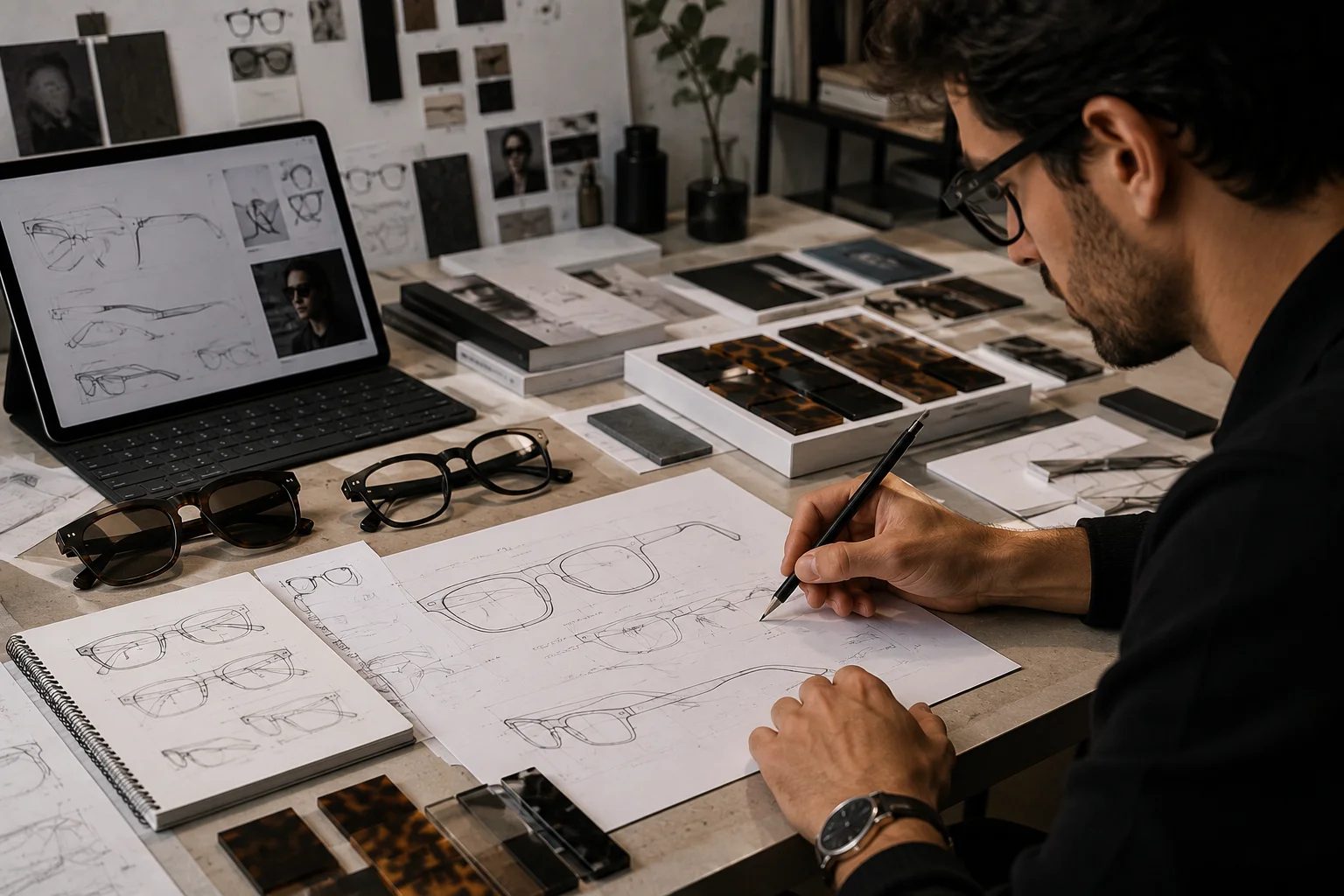
Begin with a focused video consultation. We translate your audience, market, use scenario, quality direction and creative references into a visual concept and sampling-ready engineering drawings.
START WITH CLARITY
Before drawing, we recommend a video meeting to understand who the product is for, where it will be sold, how it should feel and what the commercial target looks like.
With this foundation, we can recommend a suitable material and production route before design work begins.
YOUR DESIGN BRIEF
You do not need a finished technical drawing. Bring the best information you have today.
Target country or region, customer group and whether the collection is designed for men, women or a unisex audience.
Resort, work, everyday, sport or another specific context. The use case changes the construction priorities.
Light and effortless, or more substantial and expressive? Tell us the comfort and weight direction you prefer.
Acetate, metal, titanium or TR90. If you are unsure, we will compare routes against your design and budget.
Share brands, silhouettes or products you admire and clearly mark what you want to keep, change or avoid.
Target retail price, expected production budget, planned quantity and intended launch window.
START FROM WHAT YOU HAVE
References help communicate proportion and character. They are used as design inputs, not as permission to copy another brand.
QUALITY IS A DESIGN INPUT
Materials, construction, finishing and quantity can change the production route and unit cost. We use your target selling price and purchasing expectation to propose a commercially realistic direction.
For accessible retail positioning with a clear quality specification and controlled construction.
For quality-led brands requiring stronger material, finishing and product-detail expectations.
Most flexible development bandFor complex materials, processes, finishing or construction that require a higher development budget.
These indicative ranges refer to the per-frame unit price for bulk production and include standard basic lenses. Mould/tooling fees, sample-making costs and separate design-development fees are not included and are quoted by project. Final bulk pricing depends on the approved design, material, finish, lens specification, quantity, testing, packaging and trade terms. DMARJAN focuses on quality-led projects rather than the lowest possible specification.
FROM CONVERSATION TO SAMPLING
Every stage has a specific decision. You approve the direction before we move into engineering and sampling.
DISCOVER
PLAN
VISUALISE
REFINE
ENGINEER
HAND OFF
The usual window begins after the brief, design scope and project start are confirmed. Time waiting for client feedback and major changes to the approved brief may extend the schedule.
DESIGNED FOR A REAL WEARER
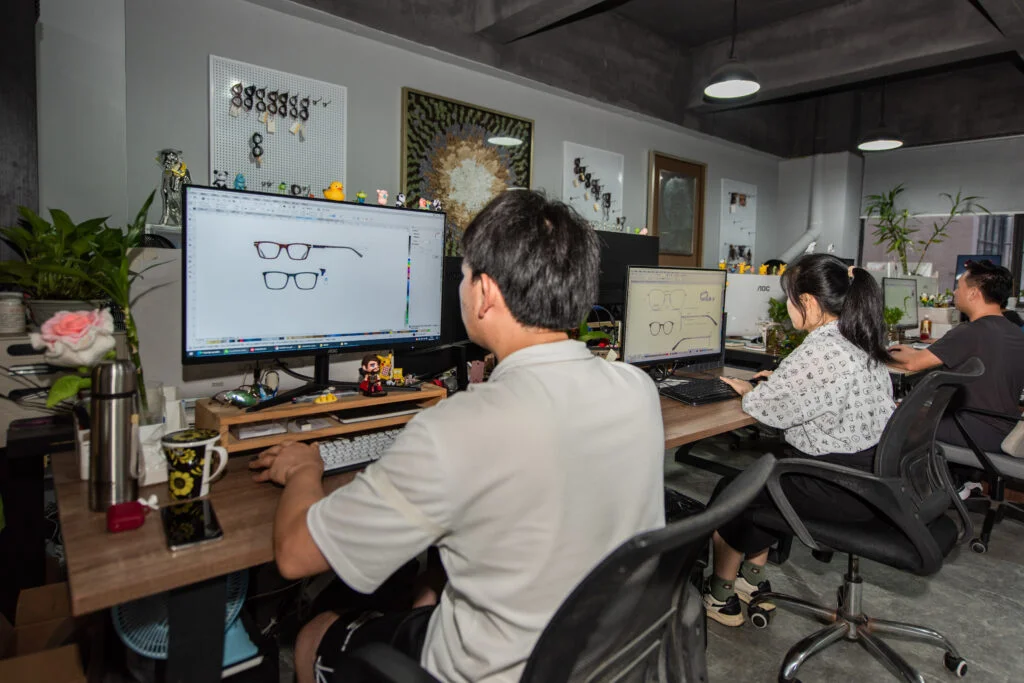
Our designers use the target market, wearer profile and use scenario to propose a starting size and fit direction. We do not treat regional or gender labels as a fixed size rule.
The engineering drawing establishes the intended dimensions and structure. Physical comfort and final fit are then validated through the sample before bulk production.
WHAT YOU RECEIVE
The goal is not only a beautiful image. It is an approved direction that can enter sample development.
Confirmed audience, use case, quality and commercial direction.
Suggested material and development approach based on your brief.
Colour rendering with approved shape, proportion and key details.
Key dimensions, structure and construction information for sampling.
Approved design direction prepared for paid physical development.
COMMON QUESTIONS
No. You can begin with a hand sketch, AI concept image, moodboard, reference frame or a clear written direction.
Yes. We can use it as a visual starting point, then review proportion, materials, construction and manufacturability.
References are useful for explaining character and proportion. The project must define original changes and respect third-party design and trademark rights.
Usually 10–15 days after the brief, scope and project start are confirmed. Client response time and major brief changes are not included in that usual window.
They are indicative unit-price ranges for bulk production and include standard basic lenses. Mould/tooling, sample making and separate design-development costs are quoted separately. The final quotation follows the approved specification, order quantity, testing, packaging and trade terms.
Within the agreed brief, we refine the same eyewear style until the design direction is confirmed. Designing a different style, or changing the agreed market, material, construction or creative direction, is treated as a new design scope.
The project can move into paid sample development. The sample is used to validate physical fit, materials, finish and construction before bulk production.
BEGIN WITH YOUR CUSTOMER
Book a video consultation and share what you already know about your market, audience, design and budget.